

-
Le Vian Couture® Pendant featuring 1 cts. Alexandrite, 2 1/2 cts. Vanilla diamonds®set in P95
Style #: MLAA 1142P
MSRP: $58,247.50
Alexandrite
Alexandrite was first discovered in 1830 in Russia’s Ural Mountains. Named after then 12-year-old Alexander II, who would become Czar Alexander II in 1855. This very rare variety of the mineral chrysoberyl has amazing chameleon-like qualities depending on the source of light: in daylight or fluorescent lighting, its color is green; incandescent lamps produce a purplish-red hue.
Alexandrite is also pleochroic, which means you can see different colors – generally green, orange and purple red - from viewing the gem at different angles. The unique displays of color are a result of this rare mineral’s lightabsorbing properties.
Today, the durable Alexandrite can be found in Sri Lanka, East Africa, and Brazil. Factors in determining the quality of an Alexandrite include a strong color change and moderate saturation, clarity, although the rare needlelike "cat’s eye" can increase its value, and cut.
VANILLA DIAMONDS®
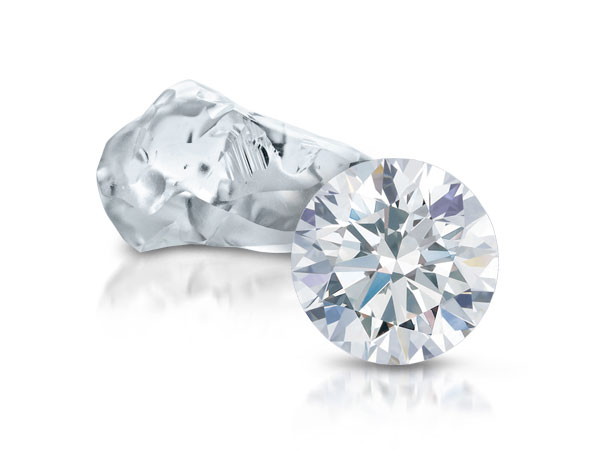
The journey of a diamond in the rough to the sparkling diamond design you love is a fascinating story, one that began billions of years ago, deep within the earth where a diamond has formed under extreme heat and pressure. Its ascent from its natural home is forced by nature or man where it is then cleaved, cut and polished revealing its natural beauty. Diamonds are the hardest material on earth and the only gem that is composed of only one element, carbon.
Vanilla Diamonds® are specially selected to adorn Le Vian® designs – from breathtaking one-of-a-kind red carpet favored designs in Vanilla Gold® to the trendsetting combination of Strawberry ‘N Vanilla® featuring the blushing hue of Strawberry Gold® topped with Vanilla Diamonds®.
Reserve Platinum Alexandrite 1 cts. Pendant with Vanilla diamonds® 2 1/2 cts.
Your Details
Your Home Store
Platinum Alexandrite 1 cts. Pendant with Vanilla diamonds® 2 1/2 cts.